How to Change Glock Sights – Johnny Glocks Gear Guide
Video Walkthrough: Watch on YouTube
This breakdown comes from a real-world install where Johnny walks through how he sets up Glock sights—and more importantly, what actually affects performance after the install.
This isn’t just about getting sights onto the gun. It’s about making sure the entire system works together.
Jump to a Section
- 01:10 – Glock 17 Build Start
- 02:20 – Recoil Springs and Guide Rods
- 03:37 – Sight Setup and Optic Plates
- 05:06 – Tools and Installation Techniques
- 09:36 – Performance Over Aesthetics
- 10:53 – DIY vs Gun Shop Costs
- 15:16 – Co-Witnessing and Dot Work
- 18:51 – Real-World Testing
Build the Gun as a System First
One of the biggest points that comes up is this: sight installation doesn’t exist in isolation.
Before dialing in sights, the focus is on:
- How the gun cycles
- How consistent the trigger is
- How the slide behaves under recoil
If those variables aren’t controlled, sight alignment won’t fix the problem—it just hides it.
What Actually Affects Sight Performance
It’s easy to assume sights = accuracy.
But what consistently shows up is:
- Inconsistent recoil behavior
- Poor return to zero
- Movement in the optic system
All of these show up as “sight issues”—but they’re not caused by the sights.
They’re caused by the system behind them.
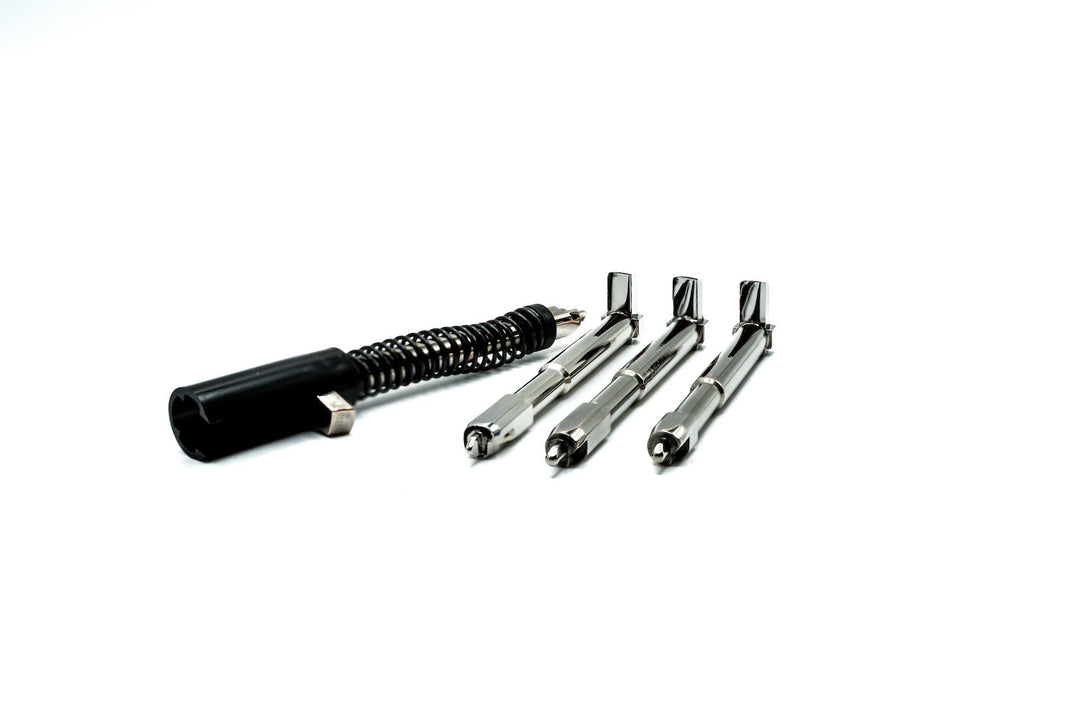
Recoil Systems: Where Tracking Starts
From what we see across builds:
- More complex recoil systems can introduce variability
- Simpler setups tend to behave more predictably
- OEM recoil assemblies are often a strong baseline
There’s also a preference toward setups that produce a consistent recoil impulse, especially across different ammo types.
The goal isn’t to over-tune—it’s to eliminate inconsistency.
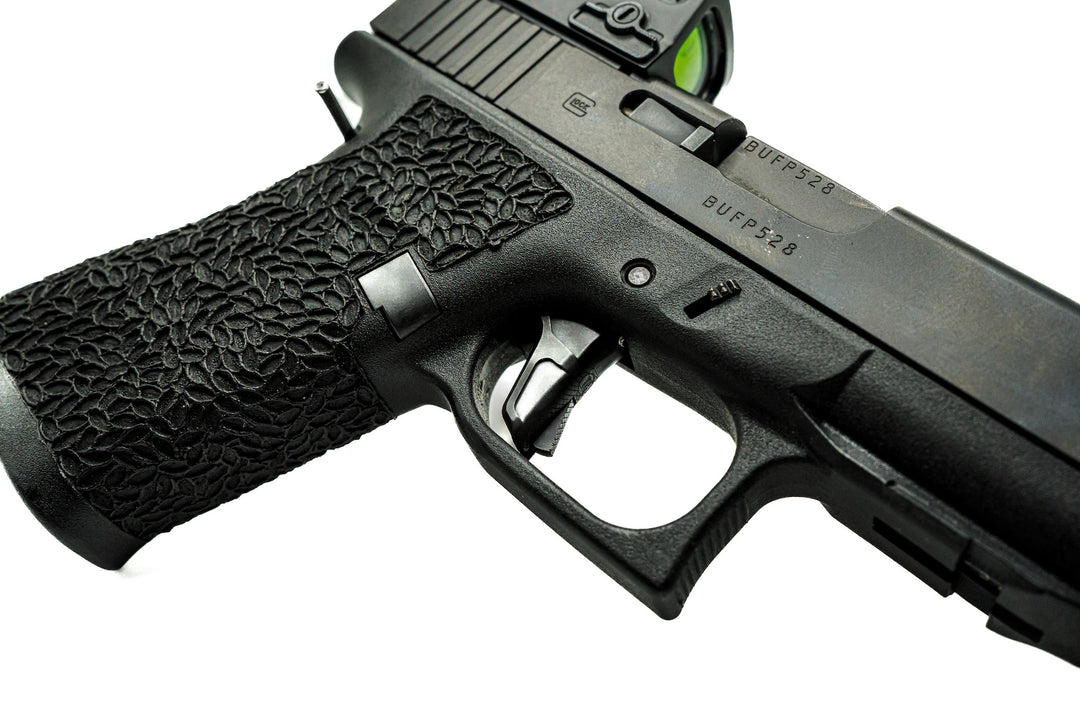
Optic Mounting Is Where Most Problems Come From
A major theme: Most optic issues aren’t the optic.
They’re mounting-related.
Common failure points:
- Plates not sitting flush
- Improper screw engagement
- Stacking tolerances between components
If anything shifts under recoil, the zero won’t hold—no matter how good the optic is.
Tools Matter More Than People Think
Installation is less about force and more about control.
Using a sight pusher allows:
- Even pressure
- Better alignment
- Less risk of damaging the slide
Other methods can work—but they introduce more variables and less repeatability.
Front Sight Installation Requires Precision
A small detail that causes a lot of problems:
- Over-tightening risks damage
- Under-tightening allows movement
Proper torque and thread locker matter—but final confirmation doesn’t come from looking at it.
It comes from shooting it.
Performance vs Aesthetics
A consistent theme across builds: If a part doesn’t improve performance, it usually creates more problems than it solves.
Many reliability issues come from:
- Unnecessary upgrades
- Poor installs
- Trying to “improve” things that already worked
Simpler, well-fitted setups tend to hold up better over time.
Where Most Glock Builds Go Wrong
After working on large volumes of pistols, the pattern is predictable. Problems usually come from:
- Installation errors
- Component mismatch
- Chasing trends instead of sticking to what works
Rarely is the base Glock itself the issue.
Real-World Validation Is the Only Test That Matters
You don’t confirm a setup at the bench. You confirm it under recoil.
What matters:
- Does it return to zero consistently?
- Does anything shift after multiple rounds?
- Is tracking predictable shot to shot?
If not, something in the system—not just the sights—needs to be addressed
Key Takeaways
- Sight installs only work if the system behind them is consistent
- Recoil behavior directly affects tracking and accuracy
- Most optic issues come from mounting, not the optic itself
- Precision tools reduce variability in installation
- Simpler setups tend to perform more reliably over time
Final Word
Installing sights is straightforward. Building a gun that performs consistently is not. The difference comes down to:
- Controlling variables
- Using proven setups
- Prioritizing performance over everything else
That’s what actually holds up under real use.
Tags: Glock Sight Installation, Glock 17 Build, Glock Optics Setup, Recoil Springs, Johnny Glocks