TriggerTech ACE Review: Johnny Glocks & Ben Stoeger Test It
Video Walkthrough: Watch on YouTube
When Ben Stoeger sits down with Johnny Glocks, the conversation doesn’t drift into rumors or internet hot takes. It stays where it always does: hands-on testing, real observations, and what actually matters when a trigger is inside a working gun.
In this discussion, Johnny walks Ben through the concerns he uncovered while evaluating the TriggerTech ACE trigger system. What started as a simple “this feels a little off” turned into a deeper look at consistency, wear patterns, and how the trigger behaves when you stop babying it and start treating it like real equipment.
Jump to a Section
- 00:30 – What Sparked the Initial Concern
- 01:35 – Inconsistent Trigger Feel
- 02:45 – Internal Wear Observations
- 04:00 – Drop Test Results
- 05:30 – Variations Between ACE Units
- 06:50 – Johnny’s Recommendations
What Sparked the Initial Concern
Ben Stoeger: “So what was the first thing that made you stop and say, ‘Okay, something’s not right here?’”
Johnny Glocks: “It was the break. It didn’t feel the same every time.”
Johnny explains that with a premium trigger, consistency is non-negotiable. When the break alternated between crisp and soft depending on how the slide was cycled, that alone justified a closer look. A trigger can feel great once. It has to feel great every time.
Inconsistent Trigger Feel
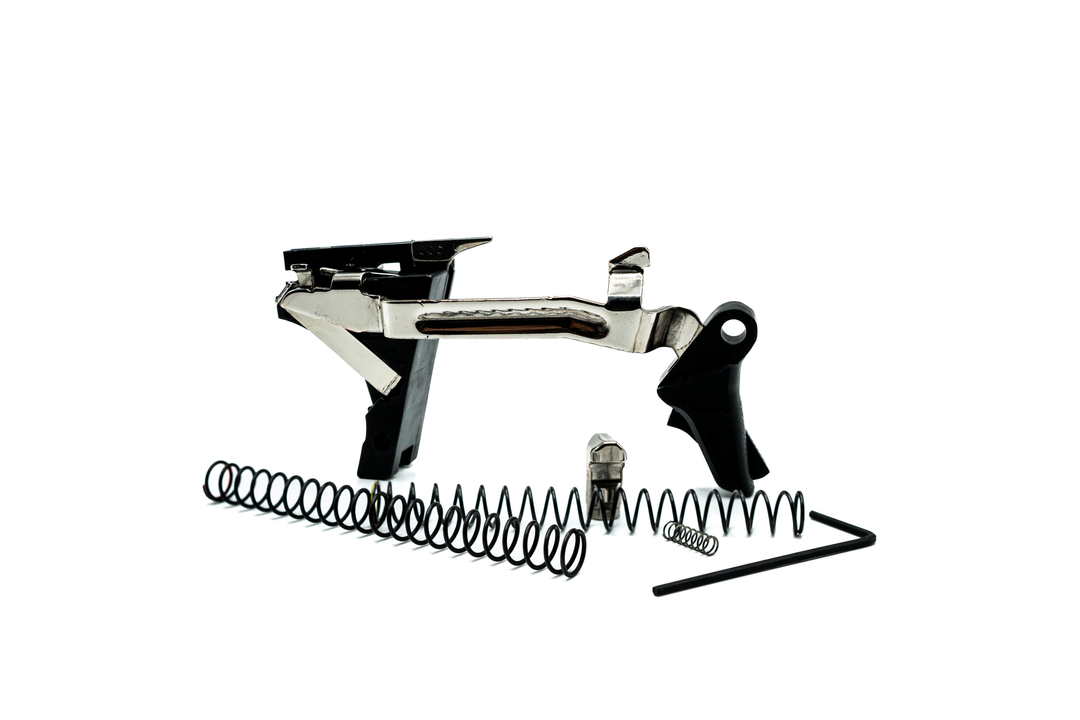
As Johnny walks Ben through the trigger press, he explains that the ACE wasn’t locking up identically from cycle to cycle. Depending on slide manipulation, the trigger would engage at slightly different points.
For competition shooters, that unpredictability is frustrating. For duty or defensive guns, it’s a bigger concern.
Johnny: “When engagement changes, your wall changes. And when your wall changes, your confidence changes.”
Ben nods. Anyone who’s spent time chasing repeatable trigger prep knows exactly what that means.
Internal Wear Observations
Once Johnny pulled the trigger apart, things started to make more sense.
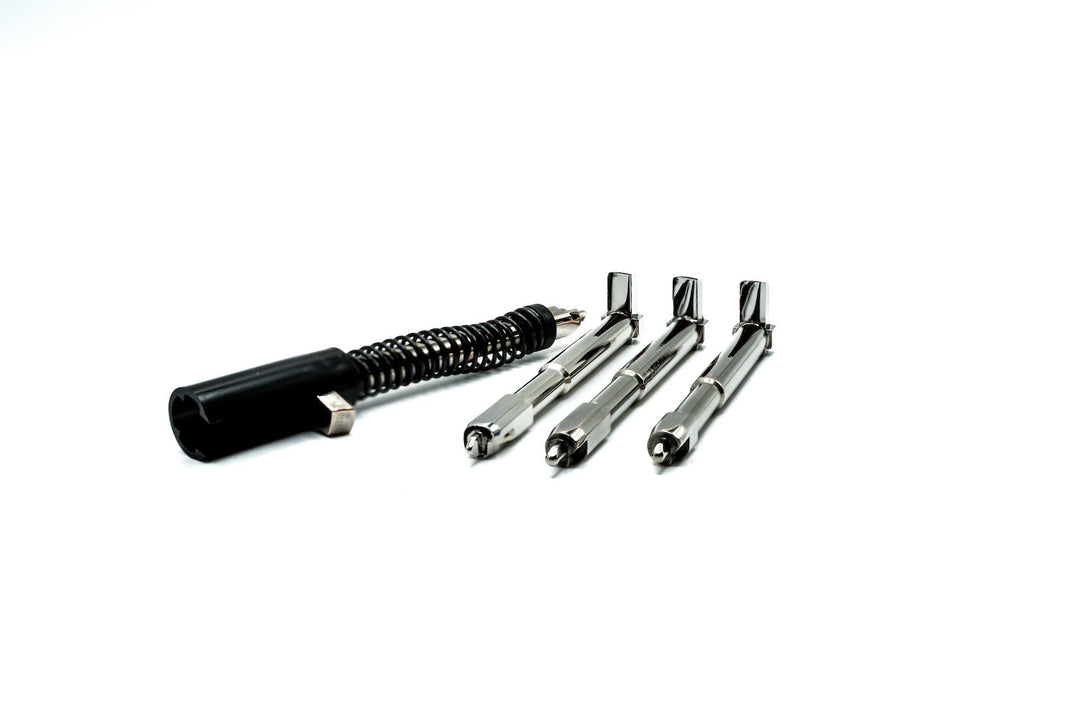
Early wear marks were already visible on key contact surfaces. Not catastrophic damage, but enough to suggest uneven engagement and possible internal misalignment.
Johnny: “Early wear tells you a story. It says parts aren’t settling the same way every time.”
Ben points out that early wear doesn’t automatically mean failure, but it does mean you pay attention.
Drop Test Results
This is where the conversation gets serious.
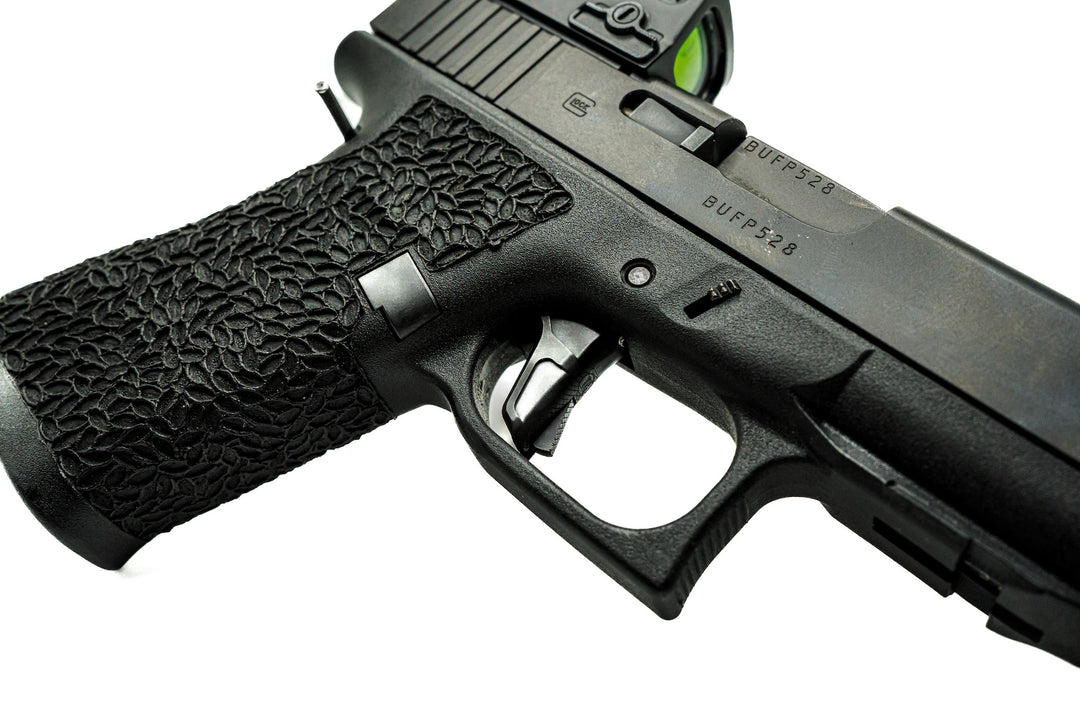
Johnny ran controlled drop tests to see how the ACE behaved under impact. While some drops were uneventful, others produced inconsistent results, suggesting that internal components weren’t always returning to the same mechanical state.
Johnny: “Even if it’s occasional, that matters. A trigger should behave the same way every time, especially when gravity gets involved.”
The takeaway isn’t panic. It’s awareness.
Variations Between ACE Units
To rule out a one-off issue, Johnny tested multiple ACE triggers. That’s when the pattern became harder to ignore.
Each unit behaved slightly differently. One showed more wear. Another had reset inconsistency. Another displayed irregular lockup during drop testing.
Ben: “That lack of uniformity is probably the biggest red flag.”
Johnny agrees. Consistency across units matters just as much as consistency inside a single gun.
Johnny’s Recommendations
Johnny is careful not to paint with a broad brush.
Not every ACE trigger will show issues. Some may run fine. But shooters should verify function rather than assume performance.
Johnny: “If your break feels inconsistent, if you’re seeing odd wear, or if drop testing doesn’t look right, stop and investigate.”
His advice is straightforward: inspect your gear, test it honestly, and communicate with the manufacturer if something doesn’t add up.
Final Thoughts
This isn’t a takedown. It’s a case study.
Two experienced shooters examined a trigger system, tested it beyond first impressions, and talked openly about what they found. No drama. No speculation. Just real evaluation.
That’s the kind of conversation that actually moves the industry forward.
Tags: TriggerTech ACE, Glock Trigger Upgrade, Trigger Safety Testing, Drop Test Results, Johnny Glocks